Offshore Wind Financing: Why the Risk Profile Is Shifting
Construction risk, offtake uncertainty, and supply chain constraints drove developers away. Those dynamics are changing now.
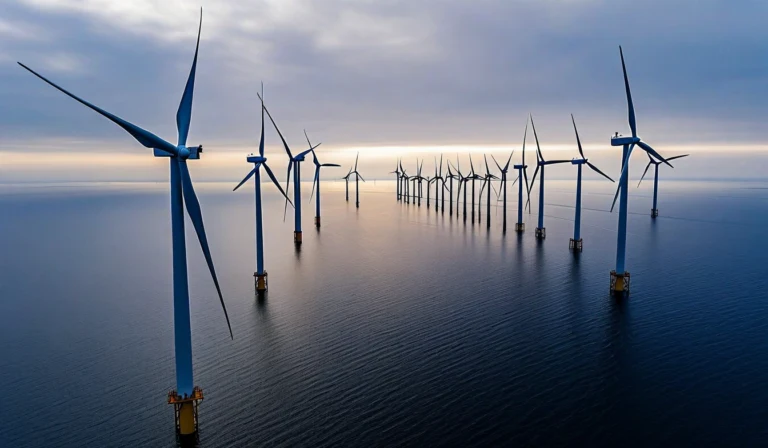
The offshore wind story in the US has been a case study in how good policy intent collides with financing reality. Between 2022 and 2024, multiple major projects were cancelled or renegotiated — Avangrid's Park City Wind, Orsted's Ocean Wind 1 and 2, BP's portfolio of New England projects. The headlines read as a sector in crisis. The underlying reality was more specific than that, and more recoverable.
What actually happened was a combination of factors that hit simultaneously and compounded each other. Interest rate increases pushed the discount rates on long-duration infrastructure projects higher, reducing project NPV even when the power purchase agreement prices stayed fixed. Steel and cable prices spiked post-pandemic and did not come down as quickly as developers had modeled. Offshore installation vessel availability became a genuine constraint — there are fewer than a dozen vessels globally capable of installing the current generation of 12 to 15 MW turbines, and booking windows stretched out years. And several state PUC processes rejected PPA repricing requests that would have made projects work under the new cost structure.
Why the Cancellations Were Not the Whole Story
The projects that were cancelled were predominantly ones that locked in PPA prices before the 2021 to 2022 inflation shock, under project cost assumptions that no longer held. That is a real problem for those specific projects. It is not evidence that offshore wind economics are fundamentally broken — it is evidence that contracts signed in 2019 and 2020 did not anticipate what happened to input costs and interest rates in 2022.
The projects under development now are being structured with those lessons incorporated. PPA prices in new solicitations in New York, New Jersey, and Massachusetts are 30 to 50 percent higher than the vintage contracts that failed. Supply chain relationships are being built longer-term. Floating foundations, which can reduce the reliance on specialized installation vessels for shallow-water work, are advancing technically. And the IRA's production tax credit for offshore wind — $0.015 per kilowatt-hour for ten years — is a meaningful contribution to project returns that was not available two years ago.
Offshore wind cancelled projects should be read as a correction, not a collapse. The supply chain over-reached at the same time capital got more expensive. Projects are now being structured with better price discovery on both inputs and offtake.
The Technology Is Still Improving
Turbine capacity has grown from the 6 MW machines that characterized the first US projects to the 14 and 15 MW machines entering commercial deployment in 2025. Larger turbines mean fewer foundations per gigawatt of installed capacity, which reduces installation vessel demand and foundation costs proportionally. The economics of scale are real: an offshore wind project using 15 MW turbines has roughly 40 percent fewer foundations per gigawatt than one using the same site with 8 MW machines.
Our portfolio company NordWind Energy works specifically on turbine performance optimization using predictive fluid dynamics — modeling the wind wake effects between turbines to improve layout design and reduce turbine-to-turbine interference losses. In offshore conditions where wind wakes can persist for 5 to 10 kilometers, optimized layout can increase total annual energy production by 3 to 8 percent on the same site footprint. At the scale of a 1 GW offshore project, that is tens of millions of dollars of additional revenue over the project life. Not nothing.
The Supply Chain Build-Out Is Real, If Slow
The US offshore wind supply chain is genuinely building. Port facilities in New Jersey, Massachusetts, Virginia, and New York have received substantial investment. Monopile manufacturing capacity is being added domestically for the first time. The Jones Act — which requires US-flagged vessels for transport between US ports — continues to constrain installation logistics in ways that international developers find frustrating, but the domestic installation vessel fleet is expanding.
None of this is fast enough for the aggressive state targets that have been legislated. New York's 9 GW by 2035 target, New Jersey's 11 GW target, and the federal 30 GW by 2030 target all imply a build rate that exceeds current supply chain capacity. But the targets are creating the demand signal that supply chain investors need to make commitments. The lag is frustrating and probably means some targets slip. It does not mean offshore wind in the US fails.
What We Watch for in Offshore Wind Deals
We do not invest in offshore wind development directly — the capital requirements and construction timelines are better suited to infrastructure funds than to an early-stage venture vehicle like ours. But we pay close attention to offshore wind market dynamics because they affect our onshore portfolio in multiple ways: NordWind's software products address both offshore and onshore optimization, and offshore wind deployment rates directly affect demand for grid upgrades, storage, and demand response products in the coastal markets.
The specific dynamics we track are offtake price trends in state solicitations (a leading indicator of project viability), installation vessel booking windows (a proxy for supply chain stress), and federal policy continuity (the IRA's wind provisions are not currently at legislative risk, but the question is always present). All three are currently moving in a constructive direction relative to 2023 and 2024.
The offshore wind setback was real. But the correction is underway, and the underlying resource — consistent, strong wind over shallow continental shelf — is not going anywhere.
Continue Reading