High-Altitude Wind: Power for Places the Grid Forgot
Airborne wind systems tap stronger, more consistent winds at altitude. The economics work differently — and for remote communities, they may work better.
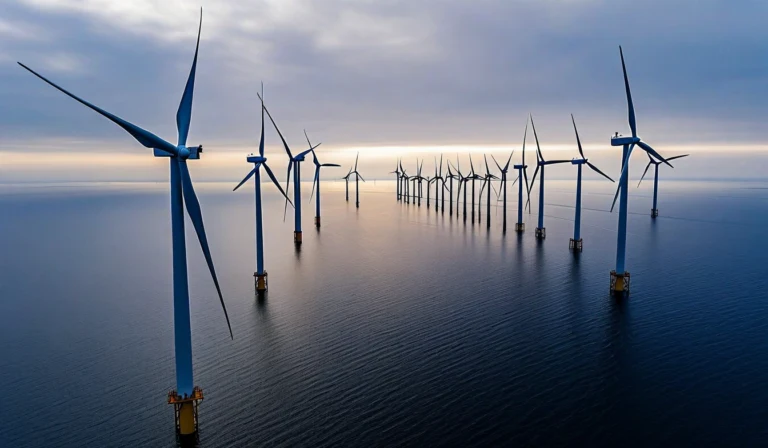
Conventional wind turbines have a size problem — not in the sense that they are too big, but in the sense that they are too heavy and too expensive to install in the places that need power most. A standard 3 MW turbine assembly weighs over 400 tons of steel, requires specialized heavy-lift cranes and concrete foundations, and needs roads capable of supporting 50-meter blade sections. Rural electrification works fine when you are 50 miles from the grid and have good road access. It does not work when you are 200 miles out, in mountainous or island terrain, and the logistics cost alone exceeds the capital cost of the turbine.
About 770 million people globally still lack reliable electricity access. A significant portion of them live in locations where conventional grid extension and conventional wind turbines are both economically implausible. Diesel generation fills the gap, at costs of $0.30 to $0.80 per kilowatt-hour — five to fifteen times what grid-connected consumers pay in developed markets. The people paying the most for energy are often the ones with the fewest clean alternatives.
What Makes Airborne Wind Different
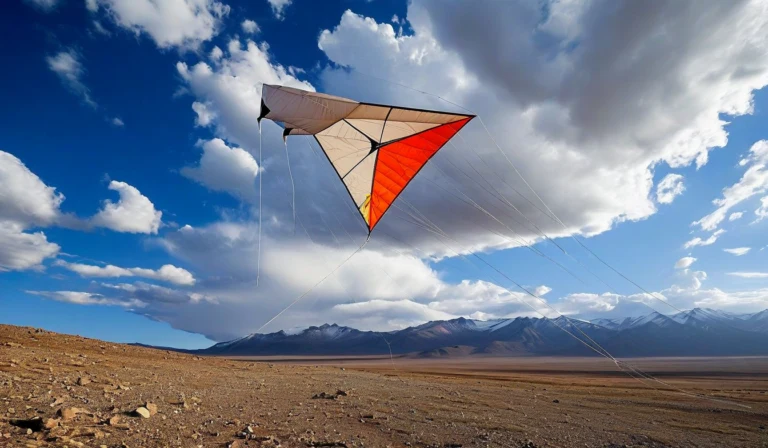
Airborne wind energy systems — the generic term for kite-based and tethered-wing generation — fly at altitudes between 200 and 500 meters, well above where conventional turbines operate. Wind speeds at those altitudes are typically 50 to 100 percent higher than at 80 to 100 meter hub height. Higher wind speed translates directly into more power: wind power scales as the cube of wind speed, so a 50 percent increase in wind speed means roughly 3.4 times more potential energy from the same swept area.
The airborne architecture eliminates the nacelle, tower, and most of the structural mass of a conventional turbine. Elevation Wind's kite-based system, which we backed in their Series A, weighs under two tons for the complete airborne component, versus the hundreds of tons of steel in a comparable-capacity conventional turbine. The ground station is modest — roughly the size of a shipping container. The whole system can be transported in a standard truck and deployed without heavy equipment.
The airborne wind value proposition is not primarily about technology — it is about logistics. For a remote community that currently runs on diesel, the question is not whether kite wind is as efficient as a Danish offshore wind farm. The question is whether it is cheaper than diesel. In many cases, it is.
The Operating Profile and Its Tradeoffs
Airborne wind systems generate power through the aerodynamic forces on the kite or wing as it flies in figure-eight or crosswind patterns, driving a generator on the ground via the tether. During the power generation phase, the kite pulls the tether out, driving the generator. At the end of the stroke, a small fraction of the generated power is used to reel the kite back to the starting position — typically at lower tension — and the cycle repeats. The ratio of power generated to power consumed in retraction determines the round-trip efficiency of the system.
Current commercial-prototype systems are achieving round-trip efficiencies of 60 to 75 percent, with capacity factors of 40 to 60 percent depending on site wind resources. Both metrics are comparable to or better than conventional turbines in the same wind regime. The control systems are complex — maintaining a kite in precise figure-eight flight across a range of wind speeds and directions requires real-time aerodynamic optimization that was not achievable with pre-2020 control hardware. It is achievable now, and reliability has improved substantially from the early development-phase prototypes.
The Market for Off-Grid Applications
The applications we find most compelling in the near term are not grid-scale deployment. They are off-grid and microgrid applications where the logistics advantage of airborne wind is decisive. Remote mining operations, island communities, military forward operating bases, rural electrification programs, and off-grid industrial facilities are all paying diesel prices today and facing rising fuel costs as supply chains get more complex.
For these customers, the comparison is not wind versus utility-scale solar or coastal offshore wind — it is wind versus diesel at $0.40 to $0.80 per kilowatt-hour. Airborne wind at $0.15 to $0.20 per kilowatt-hour, which is achievable in good wind sites with the current generation of systems, is a compelling economic proposition regardless of any policy support or carbon pricing. The business case stands on its own.
The addressable market for off-grid applications is smaller in aggregate than the utility-scale renewable market. But it is a market where early movers can build operational experience, establish customer relationships, and develop the reliability track record that will matter when grid-scale applications become viable. That path — start in the niche where you have the clearest advantage, build toward the larger market — is a pattern we have seen work in other clean energy technology categories.
The Path to Utility Scale
The longer-term thesis for airborne wind is grid-scale deployment in locations with good high-altitude wind resources and limited land or construction access — offshore, mountainous, remote continental sites. The technical requirements are more demanding: continuous operation across a wider range of conditions, full regulatory certification, integration with grid controls. None of those are insurmountable. They are engineering problems with known solution paths.
The timeline is longer than some proponents suggest. We do not expect airborne wind to be a mainstream utility-scale technology in the next five years. We do expect it to be a proven, commercially deployed technology in off-grid and remote applications — and to have the data from those deployments to support a credible path toward grid-scale certification. That is the investment thesis, and it is one we are comfortable with at the current stage of development.
Continue Reading