Locking CO2 Into Concrete Is Not a Gimmick
Mineral carbonation in concrete can permanently sequester carbon at scale. The question is whether the construction industry will adopt it fast enough.
Concrete is one of the most carbon-intensive materials on earth. Cement production — the process of heating limestone to produce clinker — releases CO2 both from the combustion of fuel and from the chemical decomposition of the limestone itself. The result is that concrete accounts for roughly 8 percent of global CO2 emissions, making it a larger single source than aviation, shipping, or agriculture.
The obvious mitigation path is reducing the carbon intensity of cement production: switching to alternative fuels, using supplementary cementitious materials to replace some clinker, and improving kiln efficiency. These approaches are important and underway. But there is a second mechanism that receives less attention and that we think deserves considerably more: mineral carbonation, in which CO2 is chemically bound into concrete itself during the curing process, becoming a permanent, geologically stable mineral carbonate.
How Mineral Carbonation Actually Works
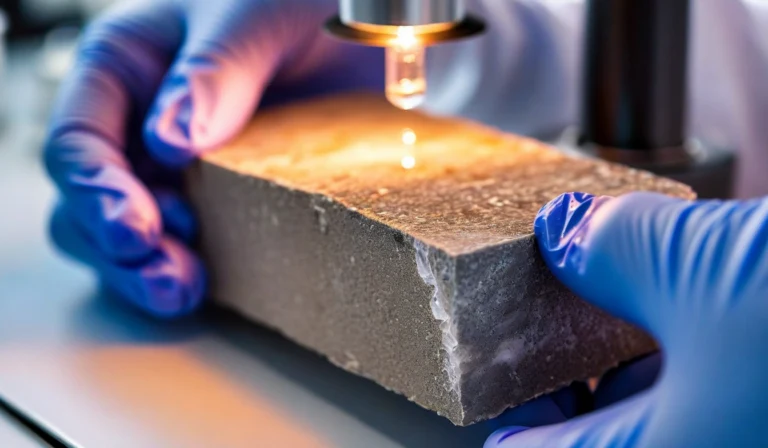
When CO2 dissolves in water and comes into contact with calcium silicate hydrates in fresh concrete, it reacts to form calcium carbonate — the same mineral that makes up limestone and marble. This is not a subtle effect: the reaction is thermodynamically stable, permanent under any normal environmental condition, and actually improves certain mechanical properties of the concrete. Compressive strength typically increases by 10 to 20 percent in carbonated concrete compared to control samples cured in ambient air. Permeability decreases, which improves durability and resistance to reinforcing steel corrosion.
The challenge is getting CO2 into contact with fresh concrete at sufficient concentration to drive the reaction efficiently. Early mineral carbonation approaches required special curing chambers with elevated CO2 concentrations — practical for precast concrete plants, less so for poured-in-place construction. ClearSky Thermal, our seed-stage portfolio company, has been working on a different approach: injecting CO2 into the mixing water during batching, allowing the gas to dissolve and distribute throughout the mix before placement. This makes mineral carbonation compatible with conventional ready-mix concrete production without requiring specialized curing infrastructure.
The fundamental appeal of mineral carbonation is permanence. CO2 in geological carbonate form will not escape back to the atmosphere regardless of what happens to the structure over decades or centuries. That is a different category of sequestration than most nature-based or even many geological storage approaches.
The Sequestration Potential Is Significant
Global concrete production runs roughly 4 billion cubic meters per year. The theoretical sequestration capacity — if you assume optimal CO2 uptake during curing — is on the order of 1.5 to 2 billion tons of CO2 per year. In practice, achievable sequestration with current technology is lower: somewhere between 5 and 15 percent of the theoretical maximum, depending on the process, the concrete mix, and the curing conditions. Even at 10 percent efficiency, that represents 150 to 200 million tons of annual sequestration potential. For context, the entire current global capacity of dedicated carbon capture facilities is under 50 million tons per year.
Mineral carbonation in concrete is not a complete carbon solution for the construction industry. The CO2 stored in concrete is typically less than the CO2 emitted to produce the cement in the first place. But as a component of a broader decarbonization strategy — combined with clinker substitution, renewable energy in cement production, and demand-side material efficiency — it is a non-trivial contribution with a compelling cost profile.
The Cost Case Is Actually Favorable
This is where the mineral carbonation story gets interesting from an investment perspective. Unlike direct air capture, where you are building entirely new infrastructure to remove CO2 from the atmosphere, mineral carbonation uses infrastructure that already exists: concrete batching plants, ready-mix trucks, and construction sites. The incremental cost to add CO2 injection to a ready-mix operation is modest — primarily the cost of CO2 sourcing, storage, and injection equipment. In markets with industrial CO2 available as a byproduct, the cost per ton of CO2 sequestered can fall below $50. In some configurations, the strength improvement from carbonation allows cement reduction in the mix, partially offsetting the CO2 input cost.
The business model question is how the value of sequestration gets monetized. Voluntary carbon market credits, construction-sector carbon regulations (increasingly active in California, Europe, and Canada), and procurement requirements from major commercial developers who have made net-zero construction commitments are all plausible pathways. We are in the early innings of construction-sector carbon markets, but the direction is clear.
The Adoption Challenge
Concrete is a conservative industry. Engineers specify materials based on decades of performance data and liability considerations. Introducing CO2 into the mixing process is, to most concrete specifiers, a change from known behavior to something that requires new qualification testing and insurance coverage decisions. The fact that carbonation demonstrably improves strength helps — stronger concrete is easier to sell than equivalent-strength carbon-modified concrete at a premium.
The route to adoption we find most credible is through large commercial and government infrastructure clients who have made binding carbon commitments and whose procurement teams have both the mandate and the sophistication to specify low-carbon concrete. Those clients exist, they are growing in number, and they are starting to create the demand signal that pushes concrete producers to qualify and offer carbon-sequestering options.
The construction industry has never moved fast. But when the specification changes, and when the cost difference is small or negative, it does eventually move. Mineral carbonation is at that inflection point in several markets. It is not a gimmick — it is chemistry that has been hiding in plain sight in every concrete structure ever built.
Continue Reading